

- Army Emergency Relief
-
Overview
Army Emergency Relief (AER) is a private, nonprofit organization that was created to help Soldiers and their Family members who experience financial emergencies. AER provides funds to help Soldiers with immediate financial needs with rent, utilities, emergency travel, etc. AER also provides emergency funds to Soldiers' orphans and Surviving Spouses and offers undergraduate scholarships to Spouses and Children of both active and retired Soldiers. Established in 1942, AER has assisted more than 4 million Soldiers and Family members with more than $2 billion in support.
Services & Assistance (Change to Services & Assistance Enhancements)
- Special Needs Medical Equipment now 100% Grant
- Assistance up to $4,000 for Passport And Immigration Fees for Foreign-Born Spouses Now 100% Grant
- Assistance for Spouse Re-Licensing & Recertification Assistance; for Spouses of Soldiers who PCS to a State with Re-Certification Fees (up to $2,500)
- Emergency Travel for Active Duty Soldiers-50% Loan and 50% Grant
- POV Assistance for Repairs and Replacement of Current Vehicle When Cost of Repairs Exceed Book Value up to $4,000
Education Programs
AER’s Education Program is a secondary mission to help Army Families with the costs of education. There are currently two scholarship programs:
Mrs. Patty Shinseki Spouse Scholarship Program
Spouses pursuing an undergraduate degree or professional certification may receive assistance for up to four academic years of full-time study or eight academic years of part-time study. Spouses may apply year-round (no deadlines) and must re-apply every year.
MG James Ursano Scholarship Program for Children
Children pursuing an undergraduate degree who meet eligibility criteria may receive assistance for up to four academic years. Children must re-apply every year.
Eligibility and Distribution of Funds
- Spouses and Children of Soldiers in the following statuses are eligible to apply for our scholarship programs:
- Active Duty, Deceased Active, Retired, Deceased Retired, Medically Retired, Grey Area Retiree, AGR, and ARNG / USAR on Title 10 Orders for the entire Academic Year for which they are applying.
- Applicants must be listed as dependents of their Soldier Sponsor in DEERS.
- Applicants for the MG James Ursano Children’s Scholarship Program must be under the age of 24.
- Recipients must be pursuing their first undergraduate degree (exceptions may be made for Spouse Scholarship applicants) at a college or university listed in the US Department of Education’s accreditation database. Trade schools are acceptable as well. You may visit The US Department of Education’s Database of Accredited Postsecondary Institutions and Programs to determine if your school is listed.
- Scholarship awards vary each year based on the total number of applicants in each program and budget amount allotted to the scholarship program.
- If you are awarded a scholarship, the scholarship funds are mailed directly to the school indicated on your scholarship agreement prior to each term for which you have been awarded. The funds may be used for tuition, fees, books, and supplies. For recipients of the MG James Ursano Dependent Children’s Scholarship program, funds may also be used for room and board expenses.
Applications and instructions are available for all the scholarships on the AER website at www.aerhq.org
AER Checklist and Application - Use to apply for assistance
Army Emergency Relief - Application for Financial Assistance
Commander’s Referral Rack Card
Supporting Forms
AER Form 57-Budget Planning Sheet
AER Form 575-Electronic Funds Transfer (EFT) Authorization
AER Form 53-Special Power of Attorney for AER Assistance
- Army Family Action Plan
-
Making a Difference in the Quality of Life for the Army
Over 30 years, the Army Family Action Plan (AFAP) has been the primary vehicle for military personnel, Families, survivors, and civilian employees to voice concerns and drive real change. AFAP is a powerful process that lets us identify what is working, target what is not, and propose concrete solutions.
By alerting Commanders and Army leadership to areas of concern, AFAP allows decision-makers to implement plans that directly improve the standard of living and readiness across the force.
What is an AFAP Issue?
An AFAP issue is any concern that impacts the readiness, well-being, or quality of life at Fort Sill or within the Army at large.
Criteria
Details
Eligible Submitters
Active Duty, Reserve, National Guard, Retirees, Family Members, DoD Civilians, and Survivors.
Issue Scope
Can range from local base-level issues (recreational facilities, local housing) to Army-wide policy issues (pay, benefits, healthcare, entitlements).
Key Requirement
Submissions should clearly outline the problem and propose a practical, constructive solution.
Your voice does not stop at submission. Every issue goes through a rigorous routing process to ensure it is addressed by the correct level of leadership.
Phase
Process & Action Taken
1. Submission
The issue is received, reviewed for clarity, and formatted for official presentation.
2. Local Review
Issues are evaluated by local Agency/Unit leadership and the Garrison Command Team during the Installation Action Council.
3. Local Resolution
For issues within local control, the Council determines and executes a course of action for resolution.
4. Escalation
Issues that fall outside the Garrison’s authority are forwarded directly to Headquarters, Department of the Army (HQDA) for national-level consideration and resolution.
Share Your Idea Today
If you have an idea to improve the Army’s Quality of Life, we want to hear from you.
Click Here to Submit Your Suggestion

While submissions can be anonymous, we highly encourage you to provide your contact information. This allows the AFAP team to follow up, fully understand your suggestion, and prepare it in the required format for consideration.
Contact Fort Sill AFAP
If you have questions, need assistance formatting your issue, or run into any technical problems while submitting your suggestion, please reach out to us. A member of our team will be glad to assist you.
- Office Phone: +1 (580)574-4668
- Location: Fort Sill Army Community Service (ACS), Bldg 4700
The community receives feedback on the issues through periodic updates on Facebook and the installation newspaper.
Some notable changes resulting from AFAP Suggestions:
- Dog Park on Fort Sill
- Directional Signage at Fort Sill and Sheridan Road Intersection
- Fort Sill BOSS Programs
- Thrift Savings Plan
- Pet relocation reimbursement
- Sidewalks throughout the Fort Sill Community
- Pedestrian Light and Crossing at Mow-Way and Sheridan Roads
- Guaranteed Cost of Living Adjustment (COLA) for Retirees
- Developed the first policy for the Better Opportunities for Single Soldiers (BOSS) Program
- Extended educational benefits for Surviving Spouses
- Toll-free Wounded in Action phone number and improved communication to families
- Mandates state charge no more than in-state tuition rates for military personnel and their dependents
- Army Volunteer Corps
-
 2018 Family of the Year! The Citizen family.
 Army Volunteer Corps Mission Statement
Promote and strengthen volunteerism by uniting community volunteer efforts, supporting professional management, enhancing volunteer career mobility and establishing volunteer partnerships to support individual personal growth and life-long volunteer commitment.Army Volunteer Corps Vision Statement
A trained and resourced professional volunteer force supported by Army leadership and prepared to contribute to Army readiness and well-being.What can volunteering do for you?
- Gain a sense of satisfaction/achievement by meeting challenges
- Learn about the Army, its sister services, and the community
- Acquire new skills and/or expand old ones
- Obtain work experience
- Build new friendships and become a cohesive part of the community
Ongoing Volunteer Opportunities
Go to ArmyFamilyWebPortal.com to see all volunteer opportunities in Fort Sill and surrounding communities. A Quick Start Guide is provided below to help guide volunteers through the system.
Volunteer Registration
Every volunteer (to include youth volunteers) are required to be registered on ArmyFamilyWebPortal.com. In addition, a volunteer must also complete the DD2793 (below under Forms) and turn it into the Unit FRG or Organization Point Of Contact.
Contact Information
+1 (580)574-4668
- Domestic Abuse Victim Advocacy Program
-
- If you are in imminent danger and require immediate assistance call: 911
- If you feel you need to speak to an advocate immediately call the 24-hours a day, 7 days a week hotline: +1 (580)574-0871
- If you would prefer to speak to a non-military advocate call: 1 (800) 799-SAFE (7233)
- National Support Hotline call: 211
The Family Advocacy Program: Domestic Abuse Victim Advocacy Program provides comprehensive assistance and support to victims of domestic abuse to include, but not limited to crisis intervention, safety planning, assistance in securing medical treatment for injuries, information on legal rights and proceedings, referral to military and civilian shelters and other resources available to victims. Victim Advocacy services are available 24-hours a day, 7 days a week to Soldiers and Family members who are victims of intimate partner violence.
What is Domestic Abuse?
Domestic abuse is a pattern of behaviors used to establish power and control over an intimate partner through fear and intimidation, often including the use, attempted use or threat to use violence. Abuse is any controlling, hurtful act, word, or gesture that causes injury to another’s body or emotions. Domestic abuse is not a disagreement, a marital spat, miscommunication or an anger management problem. The abuse can take many forms, such as verbal, emotional/psychological, financial, sexual and physical and usually escalates in severity.
It is a crime for any person to cause YOU any physical, emotional or sexual injury or harm EVEN if that person is your spouse/partner.
Types of Domestic Abuse (include, but are not limited to):
- Physical – grabbing, pushing, holding, slapping, strangling (commonly referred to as choking), punching, biting, sitting or standing on, kicking, hitting with objects, destroying property, threatened or assaulted with knives, firearms or other weapons.
- Sexual – forcible (nonconsensual) sexual activity by one’s intimate partner or pressured to engage with multiple partners.
- Emotional – threats of violence, threats to kick you out of the house, threats to deportation/withholding immigration paperwork, withholding your important documents (social security card, driver’s license, birth certificate, etc), threat of suicide/homicide,mental degradation (name calling, social media slander/defamation of character, etc.), and isolation from friends/family.
- Financial – withholding the spouse/partner’s military I.D. card and/or withholding any financial support (refuse to sign lease, taking your name off of the bank accounts, paying you an allowance, etc) as a means of power and control.
Warning Signs:
- Your spouse/partner acts very controlling and embarrasses you with name-calling, putting you down in front of others.
- Your partner acts extremely jealous of others who pay attention to you (in public, phone call, text, social media, etc).
- You become quiet and walk on eggshells when your spouse/partner is around you.
- You are isolated from your friends and family members with limited or no contact.
- Your spouse/partner takes/hides your money and/or credit cards and makes you ask for permission to use them.
- Your spouse/partner controls what you do, whom you see or talk to and where you go.
- You or your child experience constant fear, anxiety and/or outbursts of anger.
- Your spouse/partner acts like the abuse is not a big deal, it’s your fault, or even denies doing it.
- You often cancel plans at the last minute in order to appease your spouse/partner.
- You see your partner violently lose their temper resulting in striking, breaking or destroying objects.
- You often have injuries (from intimate partner violence) that are explained to others as accidents or self-inflicted.
- You mention your spouse/partner’s violent behavior, but minimize, defend or laugh it off in order to protect yourself.
FOR MORE INFORMATION, CLICK THE LINK BELOW:
Fort Sill FAP Domestic Abuse Victim Advocate Program (DAVAP)
The Employment Readiness Program (ERP) offers resources to help with your career plan and job search. Whether you’re a military spouse or Family member who just moved to a new installation, retiree, DoD Civilian looking for new opportunities, or active duty military, Active Reserve, National Guard member, or Wounded Warrior, we’re here to help.
Our services include:
- Up-to-date information on local, national, and international employment opportunities, job market trends and education, and volunteer resources
- Information on job fairs (in person and virtual) and other hiring events
- Assistance with employment applications
- Career counseling and individual career assessments
- Résumé critiques
- Classes and seminars on self-assessment and career exploration, resume writing, interviewing techniques, dressing for success, networking, and entrepreneurship
- Information on spouse licensure reimbursement (re-licensing at a new duty station can be costly)
*Not all programs and classes are available at all ACS facilities.
Are you ready? Contact your Employment Readiness Program manager (ERPM) for more information.
Additional Resources:
(Government Links)
- Army Spouse Employment, Career and Education Resource Links: a good place start investigating employment options
- Military Spouse Education & Career Opportunities (MySECO): education and career guidance for military spouses
- Military OneSource Spouse Education and Employment: a source for trustworthy guidance on entering the workforce
- The Military Spouse Employment Partnership (MSEP): Military OneSource’s portal to connect spouses and employers
- USAjobs.gov: the Federal Government’s employment portal
- Home Based Business (HBB): options for businesses that operate from on-post quarters
- The U.S. Department of Labor: transition assistance and employment preparation for military spouses
(Non-Government, No Endorsement Implied)
- The U.S. Chamber of Commerce’s Hiring Our Heroes: An initiative that assists veterans, transitioning service members, and military spouses find meaningful employment
The Army Community Service Family Member Employment Readiness Program provides information and referral services in the areas of employment, education, training, transition, and volunteer opportunities to give the client the competitive edge needed to secure employment.
We provide current information and supportive services to minimize the employment problems associated with relocation.
Welcome to the Employment Readiness Program, a service offered to you by Army Community Service (ACS) at Fort Sill, Oklahoma! It is my pleasure to offer you an excellent program that provides you with the latest information on employment, education, training, transition, and volunteer opportunities.
Military transitions are always a challenge. To help you thrive with success through these changes, the Employment Readiness program gives you the tools and resources to be competitive while you are stationed at Fort Sill, Oklahoma.
Prior to relocating, prepare and hand-carry:
- Your credentials and ensure that you have up-to-date records of employers’ addresses, titles, etc
- Transcripts
- Certifications (if you have a professional certification, call ahead to find out that the procedure is for transferring your certification to the new location.
- Update your resume.
- Contact Past Employers for Recommendations.
- Call the Employment Readiness at the new duty station.
- Make contacts at the new duty station.
- If a family member is looking for employment but does not have a Social Security Number, obtain one before you leave your present location. For information, call the Social Security Administration, which is usually listed in the white pages in the telephone directory under” Social Security.” Budget for unemployment.
- A list of income and monthly expenses (home mortgage or rent, life insurance payments, food, transportation, etc) should be developed for the first six months after you move. Do not forget to include the additional expenses related to the relocation.
- If you are a current Civil Service employee, consult your servicing CPAC office with questions about Military Spouse Preference opportunities, forms that should be hand-carried, and the possibility of taking an extended leave without pay.
- If employment requires a background security investigation, maintain a current listing of previous residences and dates to facilitate completion of any requirements.
Collect and hand-carry the following with you to your new duty assignment:
- School transcripts.
- Updated resume.
- Name, addresses, and telephone numbers of three references.
- These should not be your immediate supervisor.
- Professional Certifications.
- Special awards or honors.
- Letters of recommendation/appreciation from current employer.
- Volunteer career portfolio.
After relocation:
- Contact the Employment Readiness Office
- Survey Employment Opportunities
- Prepare Resume
- Schedule Job interviews
If you desire personal assistance, plan to see the Employment Readiness Program at your installation 3 months prior to relocation and during the first three months following your arrival at the new duty station.
Useful Links:
Local Employment
- Army Career Alumni Program
- Cameron University
- City of Lawton
- Civilian Personnel Advisory Center (CPAC)
- Civilian Personnel Online
- Fort Sill Federal Credit Union
- Goodyear
- Lawton Public Schools
- Oklahoma Employment Security Commission
- USA Jobs
- Walmart / Sam's Club
Federal Employment:
Medical:
- Comanche County Memorial Hospital
- Duncan Regional Hospital
- Indian Health Services
- Indian Territory Home Health & Hospice
- Spectrum Healthcare Resources
- Southwestern Medical Center
- Terrahealth, Inc.
Various Other Types of Employment:
Various Contractors on Post:
- Akima Corps
- Eagle Systems and Services, Inc.
- Lear Siegler Services, Inc
- Oshkosh Truck Corporation
- SAIC
- SecTek, Inc.
- Stanley and Associates
- VT Griffin Services, Inc.
Youth Employment:
Career Search Engines:
- America’s Job Bank
- Army Spouse Employment Partnership (ASEP)
- Career Builder
- FedWorld Information Network
- Military Spouse Career Center
- Military Spouses Career Network
- Military Spouse Job Search
- Oklahoma Joblink
Tools:
Disclaimer: These links do not constitute endorsement by the U.S. Army or Fort Sill Army Community Service. The DOD, U.S. Army, and ACS are in no way responsible for any fees or costs you may incur by visiting or patronizing these sites.
- Family Advocacy Program (FAP)
-
Fort Sill Out-of-School Home-Alone Policy
The US Army Family Advocacy Program is dedicated to the prevention, education, prompt reporting, investigation, intervention, and treatment of spousal and child abuse and neglect. The program provides a variety of services to Soldiers and Families to promote resiliency and readiness through the enhancement of relationship, coping, and parenting skills. These skills help to decrease the incidences of both intimate partner violence and child abuse/neglect by helping families identify, establish and maintain their resilience. This mission is accomplished through a variety of classes, groups, workshops and counseling, and intervention services:
- FAP prevention and education (enrichment classes and seminars/workshops)
- Domestic Abuse Victim Advocacy Program (DAVAP)
- New Parent Support Program (NPSP)
- Domestic Abuse Victim Advocacy Hotline: +1 (580)574-0871
For additional information, contact the Family Advocacy Program at +1 (580)574-4668.
- Exceptional Family Member Program (EFMP)
-
The Exceptional Family Member Program (EFMP) provides a comprehensive and all-inclusive approach in coordinating military and civilian community, educational, medical, housing, and personnel services to help Soldiers and their Families with special needs.
Exceptional Family Member (EFM)
An EFM is a Family member with any physical, emotional, developmental, or intellectual disorder that requires specialized treatment, therapy, education, training, or counseling, and meets the eligibility criteria. Some examples of EFMs are those with asthma, autism or PDD, Attention Deficit Disorder (ADD or ADHD), diabetes, arthritis, depression, bipolar, or schizophrenia, anxiety/phobias, and panic disorders, learning disabilities or any special education services, and high-risk newborns.Re-Assignment Process
Soldiers eligible to relocate their Families at government expense should identify Family Members with a medical, physical, emotional, or intellectual disorder to assignment authorities in accordance with AR 600-75. Enrollment in the EFMP is mandatory and ensures the needs of the family are considered during the assignment process.Soldiers are responsible for keeping their EFMP enrollment current as EFM conditions change or at least every three years, whichever comes first.
Eligibility
- Active Duty Army
- U.S. Army Reserve Soldiers in the USAR – Active Guard Reserve program
- USAR Soldiers on active duty exceeding 30 days
- U.S. Army National Guard personnel serving under the authority of title 10, United States Code.
Benefits of the EFMP
Enrollment allows assignment managers at military personnel agencies to consider the documented medical needs of exceptional Family members in the assignment process. Both medical and educational needs are taken into consideration in an OCONUS assignment. All local school systems in CONUS and its territories are required by public laws to provide a Free and Appropriate Public Education (FAPE), to include the provision of special education.Depending upon a valid personnel requirement for the Soldier’s grade, specialty and eligibility for the tour; when possible, Soldiers are assigned to an area where the medical and special education needs of their exceptional Family member can be met.
Important Phone Number
RACH EFMP Coordinator (Enrollment/Screenings) +1 (580) 558-8229
EFMP Family Support
ACS EFMP offers the following information, referral, and family support:
- On and off-post agencies and support groups
- Educational workshops and recreational activities
- Relocation services
- Support non-medical counseling
- Respite care services
- Administrative assistance with deletions and deferments of assignments
- Educational and medical advocacy for needed services
- Facilitating exceptions to policy for housing
Systems Navigation Services
Systems Navigation is a family support component of the EFMP that connects Families with special needs to the systems of care they need, both on and off the installation.
How can an EFMP Systems Navigator help your Family?
- Identify your EFM and Family strengths and needs
- Provide Special Education guidance and support including assistance with IEPs and 504 plans
- Help prioritize your EFM and Family goals by developing a Family Service Plan
- Provide information about disabilities or medical conditions of concern
- Provide information on available and/or services in the community.
- Identify support groups and social activities
- Strengthen your ability to advocate for your EFM
Systems Navigators also assist Families who are transitioning from the program, due to retirement, separation from the military, transition to Title 32 status, or transition to another duty station.
(MIAT)
The (MIAT) is required when enrolling a child with disabilities in CYS Services. To ensure the child’s health and safety needs are met in the center programs, the MIAT process supports the Family, EFMP, and CYS Service staff in working together to develop a support plan and implement appropriate accommodations. For more information about MIAT, call CYS Services Parent Central Services at +1 (580)442-3927.
Important Phone Numbers
EFMP Program Manager: (Family Support) +1 (580)574-4668
Systems Navigator: (Family Support)+1 (580)574-4668
EFMP 101 (Virtual Q&A)
First Thursday of every month from 1 – 2 pm. Navigating the EFMP doesn't have to be a solo mission. Join our dedicated System Navigators for an essential virtual orientation that breaks down the "who, what, and how" of EFMP. This isn’t just a dry briefing—it’s an interactive, virtual open forum where Soldiers, Commanders, and Family Members can get direct clarity on the latest policies, ask specific questions to local experts, and gain the vital knowledge needed to advocate confidently for their loved ones. Discover how to fully leverage the robust resources available right here at your duty station to significantly improve your family’s quality of life—simply register here: https://tinyurl.com/yc4wfbk4 via Microsoft Forms or scan the event flyer's QR code to secure your virtual seat today!

Playgroups & StoryTime
2nd & 4th Tuesday of the month at 11 am. Looking for a welcoming, inclusive space where your little ones can thrive and build friendships? Designed specifically with our exceptional families in mind, these interactive sessions are hosted in a calm, sensory-sensitive environment featuring adapted activities, low-noise levels, and plenty of space for children to explore at their own pace. From creative, hands-on crafting projects to uplifting story times complete with free book giveaways to help grow your home library, these meetups offer the perfect, stress-free opportunity for children to socialize while parents and caregivers connect and share valuable community resources.
- Learn About Army Life - Army Family Team Building (AFTB)
-
Army Family Team Building (AFTB) - Soldier and Family Readiness Group (SFRG)
Fort Sill Army Community Service (ACS) is dedicated to the belief that a Soldier’s readiness is intrinsically linked to the readiness and resilience of their Family. By equipping Families with the knowledge, skills, and support networks they need, we ensure our units remain fully prepared to accomplish the mission.
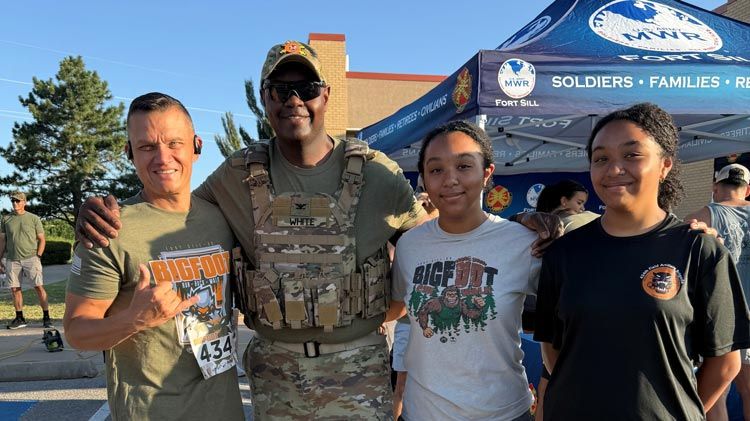
AFTB is a series of progressive training modules designed to help Family members, Soldiers, and Civilians grow personally and professionally. These classes teach individuals how to navigate the military lifestyle, develop leadership skills, and build strong support networks within the community.
The following courses are available online through the Army Family Web Portal (AFWP) Online Learning Management System (OLMS).
AFTB Training Modules
Course Level
Focus & Target Audience
Description & Enrollment Link
Personal Growth (G) Level
Spouses, newer military Family members, and individuals looking to enhance personal skills.
Learn to improve personal relationships, communication techniques, and stress-management skills. Discover how teams form, how to solve problems, and how to resolve personal conflict. Participants also learn about Army traditions, customs, courtesies, and protocol. Enroll in Personal Growth (G) Level
Military Knowledge (K) Level
Individuals new to the Army community or those wanting to better navigate military life.
Learn to maneuver through daily challenges by deciphering Army acronyms, utilizing community resources, attaining financial readiness, and understanding the overall structure and impact of the Army mission. Enroll in Military Knowledge (K) Level
Leadership Knowledge (L) Level
Emerging leaders, SFRG advisors, and individuals looking to mentor others.
Expand your leadership capabilities and communication techniques to thrive in both military and civilian environments. Learn about different leadership styles, running effective meetings, managing group conflict, and coaching/mentoring others. Enroll in Leadership Knowledge (L) Level
Instructor, Briefer, & Facilitator Training
Family members, Soldiers, and Civilians wanting to teach or lead briefings.
Prepares individuals to become effective instructors, briefers, and facilitators. Prior teaching experience is not required. Covers platform skills, adult learning styles, managing learning environments, briefing techniques, and group facilitation basics. Enroll in Instructor Training
Note: These courses can be taken asynchronously online by clicking the links above. If you or your unit prefer an in-person, tailored class, please contact the ACS Outreach Specialist at (580) 574-4668 to coordinate training adapted to your unit’s specific schedule and needs.
SOLDIER & FAMILY READINESS GROUP TRAINING
The SFRG is a commander’s program designed to provide mutual support, official command communication, and community resource information to Soldiers and their Families. ACS provides the vital training, information, and tools necessary to establish and maintain highly effective SFRGs.
ACS offers SFRG training classes once per quarter, available both in person and virtually.
SFRG Training & Support Courses
Training Course
Core Objectives & Overview
Administration & Operations
Explores the history and mission-essential task lists of the SFRG. Clarifies the critical roles of Command, CFRRs, and SFRG volunteers, and introduces the traditional support structures within a unit.
Informal Funds
Guides units on developing an Informal Funds Standard Operating Procedure (SOP). Covers fundraising rules, gaining fundraiser approval, safekeeping, limitation of funds, and statutory accountability measures.
Volunteer Management
Provides best practices for recruiting, tracking, and recognizing volunteers. Instructs on how to properly register volunteers and record service hours in the Volunteer Information Management System (VMIS).
Care Team Training
Prepares volunteers to support families in times of crisis or casualty. Provides an overview of Care Team structures, the types of emotional and logistical support they provide, and command mobilization protocols.
Key Caller Training & SFRG 101
Teaches essential telephone tree communication, information dissemination protocols, and basic SFRG functions to ensure Families remain connected.
Helpful SFRG Resources are available through the Army’s Directorate of Prevention, Resilience and Readiness.
The Fort Sill ACS team stands ready to assist you. Whether you are a Command Team looking to schedule a block of instruction for your next training day or a Family member looking to get involved, we are here to support.
- Mobilization & Deployment/ Soldier & Family Readiness Group (SFRG) Training
-
Fort Sill Army Community Service (ACS) believes that Soldier Readiness plus Family Readiness equals Unit/Mission Readiness.
Deployment Support for Soldier/Family Readiness
ACS provides information and tools in support of unit FRGs, unit Deployments & Redeployments and Emergency Family Assistance.
- Visit ACS in Building 4700 to get information about resources/materials and agencies that can assist you with your FRG endeavors.
- Ask about getting on a distro list for information about upcoming Soldier and Family/Community events in order to ensure Soldiers and Families are aware of the available resources, activities, and opportunities in the surrounding area.
- Click on the “FRG Getting Started” information sheet and other helpful links on this page. You will find helpful forms and tools to assist you and your unit in getting your unit FRG off the ground and running smoothly (including deployment support).
SFRG Training is provided via online training for Commanders, Family Readiness Liaisons (Soldier) and Family Readiness Group Leaders and office holders (civilian volunteers).
- Access via www.ArmyFamilyWebPortal.com (updated training for civilians)
- Access via www.armyfrg.org (older version of the training)
- ALMS (for Soldiers/CAC holders) Codes: FRGCTT and FRGCTRT (refresher) and FRGVT or FRGVRT (for civilian CAC holder office holders)
Deployment Support is provided via multiple delivery systems:
- ACS’s Family Advocacy Program conducts many skill-based trainings such as True Colors, Scream Free Marriage/Parenting, Stress Management, 7 Habits of Highly Effective Military Families, and more.
- Chaplains provide multiple trainings/opportunities on marriage enrichment workshops, communications classes, and other relationship-building opportunities, and deployment-specific trainings and briefings.
- MFLCs are available in each FORSCOM Brigade and within ACS to provide a multitude of briefings to assist you in meeting the Deployment Cycle Support requirements of your deploying or redeploying unit Soldiers, Families/Children.
- The American Red Cross offers courses on deployment and redeployment expectations and readiness.
- Military One Source at www.militaryonesource.mil provides a helpful tool called “Plan My Deployment” that includes articles, webinars, checklists, FREE deployment books/materials for Children/Spouses and more. They also have a resource request function where they can be invited and attend a Townhall/Expo event you may be planning.
- On this page, you will find forms and tools to assist you and your unit during deployment, including “How to Plan a Townhall/Expo”, a resource phone number listing, Deployment checklists, and more.
Pre-Deployment Readiness Packet (SRP)
Family Readiness Group Information and Training (FRG)
FRG Fundraising Form (FS 608) MS Word Doc
FRG Fundraising Form (FS 608) Adobe Fillable PDF
FRG Fundraising Form (FS 608-2) PDF
FS 363a Family Assistance Information Sheet
Official Communications in Support of Family Readiness Memo
Rapid Response Resolution Matrix
Statement of Non-Participation or Waiver of Communication
Click the image below to download the REAL Smart Book.
FRG Resources
- www.myarmyonesource.com
- www.militaryonesource.com
- www.myMWR.com
- www.armyfrg.org
- www.arfp.org
- www.dls.army.mil/ALMS.html
- www.armyfamilywebportal.com
- Military Family Life Counselors (MFLC)
-

Need To Talk To Someone?
Military and Family Life Counselors (MFLC) provide solution-oriented consultations to individuals, couples, families, and groups.
The Military and Family Life Counselor (MFLC) Program is designed to provide support and assistance to active duty Soldiers, National Guard & Reserves, military Family Members and Soldiers' significant others. Military and Family Life Counselors can help people who are having trouble coping with concerns and issues of daily life, the stress of the military lifestyle, parenting, etc. Also, units can select topics from the briefing/presentation library for training Soldiers/Families at unit meetings.
Some Examples of Issues Include:
- Adjustment/Transition
- Stress
- Marital/couples
- Anxiety/Sadness
- Deployment Cycle Issues
- Communication
- Anger
- Work
- Parenting
- Grief/loss
MFLC Solutions:
- Flexible appointment times
- Flexible meeting locations
- *Confidential
- No Records Kept
- FREE
*Duty to warn does apply in cases of threat to self, others, and any reportable abuse issues.
Field Artillery Primary MFLC Phone 428th Brigade Rebecca Kendrick +1 (580)447-6173 434th Brigade Teresa Biffle +1 (580)279-7724 USA Field Artillery School Cliff Nunnally +1 (580)484-5552 Air Defense Artillery 30th Brigade Mary Jones +1 (405)435-0003 USA Air Defense Artillery School Cliff Nunnally +1 (580)484-5552 Tenants & Separates 31st Brigade Vernon Butler +1 (580)919-7779 75th Brigade Rosana Sankoh +1 (580)919-1798 Christina Caddy +1 (405)432-6345 428th Brigade (1/78th FA BN) Jamie Swanson +1 (580)235-9651 434th Brigade (1/79th FA BN) Jamie Swanson +1 (580)235-9651 RAHC Mary Jones +1 (405)435-0003 Garrison & Directorates Rebecca Kendrick +1 (580)447-6173 FCoE & Directorates Rebecca Kendrick +1 (580)447-6173 - New Parent Support Program
-
Expecting a new baby or do you already have the cutest baby or toddler in town? Give your baby the best with FREE and voluntary services that the New Parent Support Program (NPSP) offers for prenatal and postnatal education from Baby Massage Groups to customized breastfeeding support and more!
New Parent Support Program (NPSP) Supports You With:
- Making parenting fun and practical
- Ensuring healthy growth and development
- Connecting with local resources
- Providing tools that support successful and resilient parenting
- Breastfeeding support
- Boosting your confidence in parenthood
- Adapting to military life
- Developing a support system
- Developing common ground with your spouse, partner or co-partner in the area of parenting
- Networking to develop new friendships
- Playgroups, Exploring the Parks and Caravan Club
NPSP is a professional team of Registered Nurses and/or Licensed Clinical Social Workers with extensive knowledge about topics and issues daily confronting military parents. Home visitors are sensitive to the unique challenges facing military families.
Visits are voluntary, confidential and arranged at your convenience (including lunch hour and early evening appointments). Each home visit lasts about 40 minutes to 1 hour and is tailored to meet your family’s needs, in the comfort of your own home.
What If We Are Not "New" Parents?
"New" Parents come in many different packages (parents of older children, adoptive parents, foster parents, grandparents, guardian, etc.). If you and your child/dependent are military I.D. cardholders, give NPSP a call to talk about home visits.
Let us help you fill your toolbox with the essential skills to tackle teething, tantrums, potty-training, discipline and more, all FREE for military families. The New Parent Support Program offers you the opportunity to express concerns and ask questions with a trained professional in the comfort of your own home.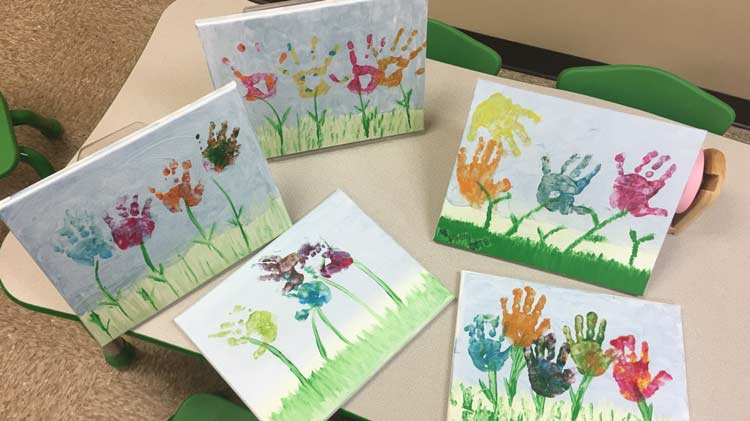
- Relocation Information
-
Getting Read to PCS?
Start Right "Soldier-In-Processing"
The schedule or process of Start Right "Soldier In-Processing" orientation will be provided to you upon check-in to the installation. Please contact the Relocation Program at +1 (580) 574-4668 for more information.
Relocation Assistance
- Soldier In-processing
- DOL Transportation
- Emergency Services
- Local Transportation
- Military Installations
Telephone Numbers:
- Post Operator, +1 (580)442-8111, DSN (312)639-8111
- Fire, Police, Ambulance, 911
- American Red Cross and the Armed Forces Emergency Service Center, +1 (580)442-2426
Healthcare
Fort Sill Housing
- Corvias Military Living
- Housing Management Division Located in Bldg. 4700, +1(580)442-4949
- Automated Housing Referral Network
- Lodging Located in Aultman Hall, +1 (580)442-5000
Area Housing
- City of Lawton Housing Site
- Fort Sill Map
- Lawton/Fort Sill Airport
- Lawton Home Builders Association
- Local Realtors
- Local Hotels
Entertainment and Travel
Child Care
Education
- CYS School Support Services
- Cameron University
- Great Plains Technology Center
- Lawton Public Schools
- Oklahoma Dept. of Rehabilitation Services
Local Employment
- Army Career Alumni Program
- City of Lawton
- Civilian Personnel Advisory Center (CPAC) +1 (580)442-2195
- Civilian Personnel On-line
- Oklahoma Employment Security Commission
- USA Jobs
Important Links
Utilities
- New to the Community
-
Pre-Arrival Support
- Attention all PCSing personnel: After completion of your LEVY Section briefing, please visit your local Army Community Service (ACS) Center to receive assistance in preparation for your relocation. Also check out on Fort Sill on Military Installations website.
- Sponsorship Program: The Relocation Readiness team, Army Community Service (ACS), offers support to personnel who are responsible for the unit’s sponsorship program, and for personnel who will provide sponsorship services to newcomers. The training is offered online at https://millifelearning.militaryonesource.mil/. The eSponsorship Application and Training (eSAT) is only 30 minutes and will teach about the tools and resources to help you sponsor a newcomer's move.
- Youth Sponsorship: The Child and Youth Services (CYS) School Liaison and the Relocation Readiness Program (RRP) assist our school-age children in obtaining teen sponsorship. Relocation does not have to be hard on kids, and the sponsorship program is designed to ease the transition.
Military Installations
https://installations.militaryonesource.mil/
This is the official Department of Defense Web Page containing detailed information about military installations worldwide! Obtain information, photos, phone numbers, and maps to assist when relocating.Fort Sill Garrison Web Page
http://sill-www.army.mil/
Installation-wide activities, information, maps, and important links are found on this web page. This is the official Fort Sill web page.Arrival Support
- Weapons Registration: Visitor Welcome Center (VWC) Building TC 6701 located on NW Sheridan Road
190-1, 10 June 2009, civilian employees working on Fort Sill; retirees who frequent Fort Sill for weapons-related purposes; and Military personnel assigned or attached to Fort Sill (who reside on post), will register their privately owned firearms (to include antiques, collectibles, bows, knives (with more than a 3-inch blade), ceremonial firearms and operational war trophies) on the installation within one working day of the soldier or the firearm(s) arriving at Fort Sill. If a soldier does not yet have a unit assigned, the weapon can be registered without the Commander’s Signature. If a soldier lives off-post, then he/she needs to seek his/her Commander’s directive as to whether they are/are not required to register his/her weapons on Fort Sill.
- Motorcycles: Must attend the Basic Rider Course prior to riding any motorcycle. Go online to https://safety.army.mil/OFF-DUTY/PMV-2-Motorcycles/Training using your CAC card to sign up for the following classes or call +1 (580)442-4215 for more information. Required documents: ID Card, Driver's License (with motorcycle endorsement), Defense Driver's Course Card (can be obtained at the Post Safety Office if you don't already have one). Motorcycle Registration (State), and Proof of Insurance. Classes include:
- Remedial/Drivers Improvement Training
- Intermediate Driver's Training
- Basic Motorcycle Course
- BRC2 (ERC) Course
- Military Sports Bike Rider Course
- ATV Training Course
- Children Safety/Seat Belts: Use of child restraint seat and seat belts are the law in the state of Oklahoma and Fort Sill.
- Cellular Phones: Use of cell phones while driving on the installation is prohibited unless you have an accessory for hands-free usage.
- Off-limits areas: Wooded areas, firing ranges, impact areas, and bodies of water are off-limits, except for units or personnel with proper authorizations.
- Accidents: Report all traffic accidents to the Military Police (MP) station at Bldg. 1649 or by phone +1 (580)442-2102.
- Lodging: Ensure you make your lodging reservations prior to your arrival. Don’t forget to inquire about the pet policy in lodging prior to making your reservations. Military personnel and family members on orders to Fort Sill may contact our Fort Sill Lodging to secure room reservations +1 (580)442-5000, DSN (312)639-5000 or toll-free +1 (877)711-8326 or visit www.ihg.com/armyhotels/hotels/us/en/fort-sill/mfokb/hoteldetail.
- Exchange (PX): Find your local Exchange in Bldg. 1718 Macomb Road, a 58-thousand square feet store.
- Commissary: The newly remodeled Commissary sits back to back from the PX, building 1719 Macomb Road. Call +1 (580)442-3601 to get a recording of the Commissary hours.
- Shoppette/gasoline stations on Sheridan Road and Fort Sill Blvd.
- Banking:
- Fort Sill Federal Credit Union on Fort Sill Boulevard, +1 (580)250-8100
- Fort Sill National Bank on Randolph Road, +1 (580)357-9880.
- School Support Services: The Lawton-Fort Sill School Liaison, located in Bldg. 4700 Mow-Way Road, Child and Youth Services, is your link for information and assistance with the area public and private schools. Contact the liaison officer at +1 (580)442-2130.
- Housing Service Office: Located in the Welcome Center (Bldg. 4700). Contact the installation HSO prior to renting, buying, or leasing off-post. This is a necessary step to protect you from doing business with an agency that may be off limits or is one with accumulated complaints on file. +1 (580)442-5190, +1 (580)442-3778 or +1 (580)442-2813.
- Corvias Military Living On-Post Housing: Fort Sill's on-post family housing is currently operated by Corvias Military Housing. They can be reached at 580-581-2144 or http://sill.corviasmilitaryliving.com.
- Lending Closet: No Contact lending closet curbside pick-up, daily by appointment. While waiting for your household goods to arrive, basic household items are available for loan (no cost) for up to 30 days! Items are for incoming and outgoing Service Members, Families, and DoD Civilians. We have small electrical appliances, kitchen utensils, cookware, tableware, children's items, sleeping folding mats, folding tables and chairs, and much more. We are located in Bldg. 4700 on the 1st floor within ACS. Closed on Holidays and Saturdays/Sundays. Please bring your military ID card and a copy of your PCS orders. Contact phone number is +1 (580)574-4668.
- Newcomers' Orientation: Fort Sill's Newcomer's Orientation "Start Right" is required for all active duty Soldiers. The schedule or process for Start Right "Soldier In-Processing" orientation will be provided to you upon check-in to the installation. Please contact the Relocation Program at +1 (580)574-4668 for more information.
- Reentry Briefing: If you are returning from an Overseas assignment, you will be made aware of the different symptoms associated with reverse culture shock. You will also learn how to identify the symptoms and how to take care of yourself and your family while going through this difficult stage. The reentry session is offered during the newcomers’ orientation.
- Immigration/Naturalization Information and Assistance: Soldiers wanting information or assistance regarding citizenship, immigration/naturalization should contact Legal Assistance at +1 (580)442-5058. These services are offered free on-post. An Immigration Law and Issues class is offered quarterly. English as a Second Language (ESL) is offered in the local community. For more information, call +1 (580)442-2360.
- Home Alone Policy: If you have children, be aware of the Fort Sill’s Home Alone regulation. The age of your child determines if she/he can be left home alone and for how long. You may stop by ACS to obtain material on this policy or access USAFACFS Regulation 210-12 for details.
- NOTE: Fort Sill and the US Army do not imply endorsement of any of the off-post or non-military agencies listed.
Reporting to Fort Sill:
Permanently Assigned to Fort Sill: Report to the Personnel Processing Branch or Welcome Center, Building 4700, Mow-Way Road, Monday - Friday, from 7:30 a.m. to 4 p.m.
After duty hours and weekends, all Soldiers report to the east entrance of Building, 4700 Mow-Way Road, +1 (580)442-3217. If you are unaccompanied SGT (E5) or below a temporary room will be provided for you. Soldiers accompanied by dependent family members, or SSG (E6) or above must check with lodging building 5676 (Ferguson Street).
- Basic Training: Report to 95th AG Battalion, (Reception Station) building 2855 on Craig Road
- Advanced Individual Training (AIT): Report to Bldg. 6007 or Bldg. 6018
- BNCOC and ANCOC students: Report to Bldg. 3662, +1 (580)442-6328 or +1 (580)442-6382
- BOLC III students: Report to Bldg. 730, Snow Hall, +1 (580)442-2301
- BOLC II students: Report to Bldg. 2437, 2470 or 2471, +1 (580)442-5315, +1 (580)442-8338 or +1 (580)442-8963
Marine Inbound Personnel:
Upon arrival at Fort Sill, report to the Marine Corps Artillery Detachment, Building #759, 759 McNair Avenue for administrative processing. The telephone numbers are +1 (580)442-3979 or +1 (580)442-6199. The Staff Duty extension is DSN (312)639-5615. Inbound Officers should contact the Detachment Executive Officer, +1 (580)442-6498, as your PCS date nears so we know when to expect you. For more information check out the Fort Sill Marine Corps Detachment homepage at http://sill-www.army.mil/usmc/index.htm.
Contact your Relocation Readiness Program office for assistance in any of the topics mentioned here, or any other issue you may encounter when planning your relocation.
Pre-Departure Support
- Overseas-bound orientations: Mandatory for Soldier going to overseas locations including Hawaii, Europe, Japan, Korea, Alaska and Middle East locations. Whenever only one or two individuals are PCSing to a specific location, deck side orientation is offered. Although the orientation is mandatory for Soldiers, spouses are strongly encouraged to attend.
- Military Installations : Visit this website to find useful information on your gaining installation and nearest military resources to your new location. You will have the ability to create a customized information packet for your next duty location.
- Plan My Move: Plan My Move creates a custom checklist for your move, filled with information about the tasks you need to complete and how to complete them. Your checklist is tailored to the unique needs that you or your family have.
- Lending Closet: No Contact lending closet curbside pick-up, daily by appointment. While waiting for your household goods to arrive, basic household items are available for loan (no cost) for up to 30 days! Items are for incoming and outgoing Service Members, Families, and DoD Civilians. We have small electrical appliances, kitchen utensils, cookware, tableware, children's items, sleeping folding mats, folding tables and chairs, and much more. We are located in Bldg. 4700 on the 1st floor within ACS. Closed on Holidays and Saturdays/Sundays. Please bring your military ID card and a copy of your PCS orders. Contact phone number is +1 (580)574-4668.
- Relocation Financial Planning Class: Offered by ACS, Financial Readiness Program. This briefing is mandatory for E1 – E4 service members.
- Sponsorship Program: All PCSing Soldiers are offered the opportunity to request a sponsor from the gaining installation. A sponsor request, DA Form 5434 should be filled out and presented to your unit.
- Survivor Outreach Services
-
We honor Soldiers who made the ultimate sacrifice for the security of our Nation by supporting and caring for their Survivors. The Army is committed to providing sustained support to surviving Family members to ease their loss, help them through a very difficult time, and provide support for as long as they desire.
Losing a loved one is an especially difficult time for those left behind. In addition to the grief the family will suffer, they will also be faced with several issues and questions about a life built around the Army. Some of these will be addressed immediately by the Casualty Assistance Officer (CAO), but some will not surface for many months or years after the Casualty Assistance process has ended. Survivor Outreach Services (SOS) can help. Fort Sill Survivor Outreach Services provides support for Families of the Fallen living in Oklahoma and Arkansas.
Fort Sill Survivor Outreach Services:
Support Coordinator: +1 (520)714-9411 or email
- Extend support to Families both before and after a crisis by maximizing cooperation between governmental and non-governmental agencies.
- Facilitate support groups where Families and individuals can share feelings, concerns, thoughts, resources, and information in a safe and understanding setting.
- Maintain personal contact with Survivor Families with phone calls, cards, and mailings.
- Offer on-site professional financial counseling to assist Families in adjusting to their unique monetary circumstances following the loss of a loved one.
- Help to train Family Readiness Groups, Care Teams, Casualty Assistance Officers, and Army Leadership about the program and Survivor issues.
- Conduct special events to provide Surviving Families an opportunity to interact and share in a social setting.
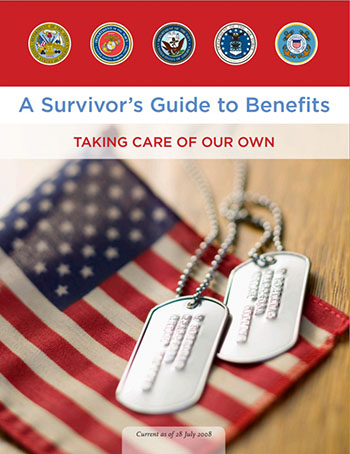
Gold Star Pins
http://www.goldstarpins.org is aimed at raising awareness of the Gold Star Pin and to ensure that our Gold Star Families receive the respect and honor they are due.
When you see someone wearing one of the Gold Star Pins, know that he or she has lost a loved one who selflessly served our nation.
The mission of ACS is to facilitate the commander's ability to provide comprehensive, standardized, coordinated and responsive services that support Soldiers, Department of the Army civilians, and Families regardless of geographical location and to maximize technology and resources, eliminate duplication in service delivery and measure service effectiveness.
ACS Operation We are Here For You: Deployment and Re-Deployment Family Support and Resources